

Support Travel Fashion Girl by using the links in our articles to shop. We receive a small commission (at no extra cost to you) so we can continue to create helpful free content. We earn from qualifying purchases made to the featured retailers. Thank you, we appreciate your support!
Confused about voltage converters vs. travel adapters? This quick guide explains the differences, when you need each one, and how to safely use your electronics while traveling internationally.
Planning an international trip? Before you pack your phone charger, laptop, or favorite hair tools, it’s important to understand the difference between a travel adapter and a voltage converter. Although the terms are often used interchangeably, they serve two completely different purposes.
Using the wrong one can damage your electronics or leave you unable to charge them altogether.
The good news? Most modern devices only require a travel adapter, not a voltage converter. In this guide, we’ll explain everything you need to know about voltage converters vs. travel adapters, including how they work, when you need one, and which travel accessories are worth packing.
When traveling with electronics, there are two things to consider:
- Plug shape: Electrical outlets vary around the world, so your plug may not fit into the wall outlet in another country.
- Voltage: Countries also use different electrical voltages. For example, the United States and Canada use approximately 120V, while most of Europe, Asia, Africa, and Australia use 220–240V.
Here’s the easiest way to remember the difference:
- A travel adapter lets your plug fit into a foreign outlet.
- A voltage converter changes the electrical voltage to match your device.
These are two separate products there isn’t a single device called a “travel adapter converter.” Knowing which one you need can help protect your electronics while traveling abroad.
In this guide we’ll cover:
- What voltage is
- What dual-voltage devices are
- How travel adapters work
- How voltage converters work
- Traveling with hair dryers and straighteners
- Traveling with laptops, tablets, and other electronics
Best Universal Travel Adapter with USB Ports: NEWVANGA International Universal All in One Travel Adapter
What is voltage?
Voltage refers to the amount of electrical power supplied by an outlet. Because countries use different electrical systems, your devices may not always be compatible when you travel internationally.
For example:
- North America: 110–120V
- Most of Europe and many other countries: 220–240V
If you plug a 120V-only appliance into a 220–240V outlet without the proper equipment, you risk damaging the device, blowing a fuse, or even creating a safety hazard.
High-powered appliances like hair dryers, curling irons, and flat irons are especially sensitive to voltage differences, making it essential to check their voltage compatibility before your trip.
To safely use electronics abroad, you’ll typically need:
For a complete list of electrical systems around the world, check our voltage-by-country guide.
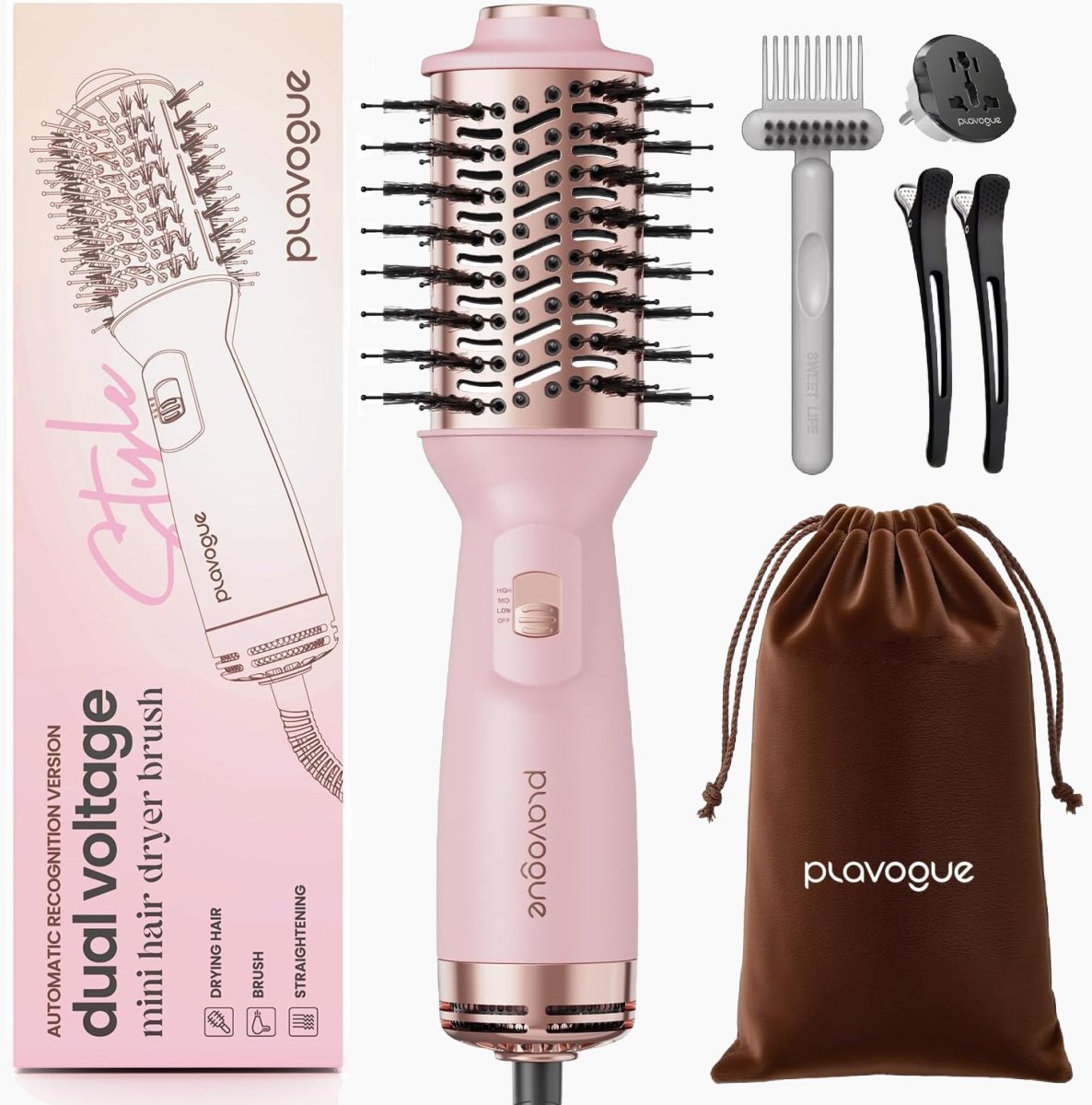
Best Dual Voltage Hair Dryer Brush: Dual Voltage Plavogue Styling Brush
What Is a Dual-Voltage Device?
A dual-voltage device is designed to operate safely on both 110–120V and 220–240V electrical systems, making it ideal for international travel.
Look for a label on your charger or appliance that says something like:
Input: 100–240V, 50/60Hz
If you see this, your device is dual voltage and only needs a travel adapter to fit the local outlet.
Most modern electronics are already dual voltage, including:
- Smartphones
- Tablets
- Laptops
- Cameras
- Smartwatches
- Most USB chargers
Some hair styling tools are also dual voltage, but many require you to manually switch between voltage settings before plugging them in. Always check the manufacturer’s instructions before use.
If your appliance only lists 110–120V, it’s best to leave it at home or replace it with a travel-friendly dual-voltage version.
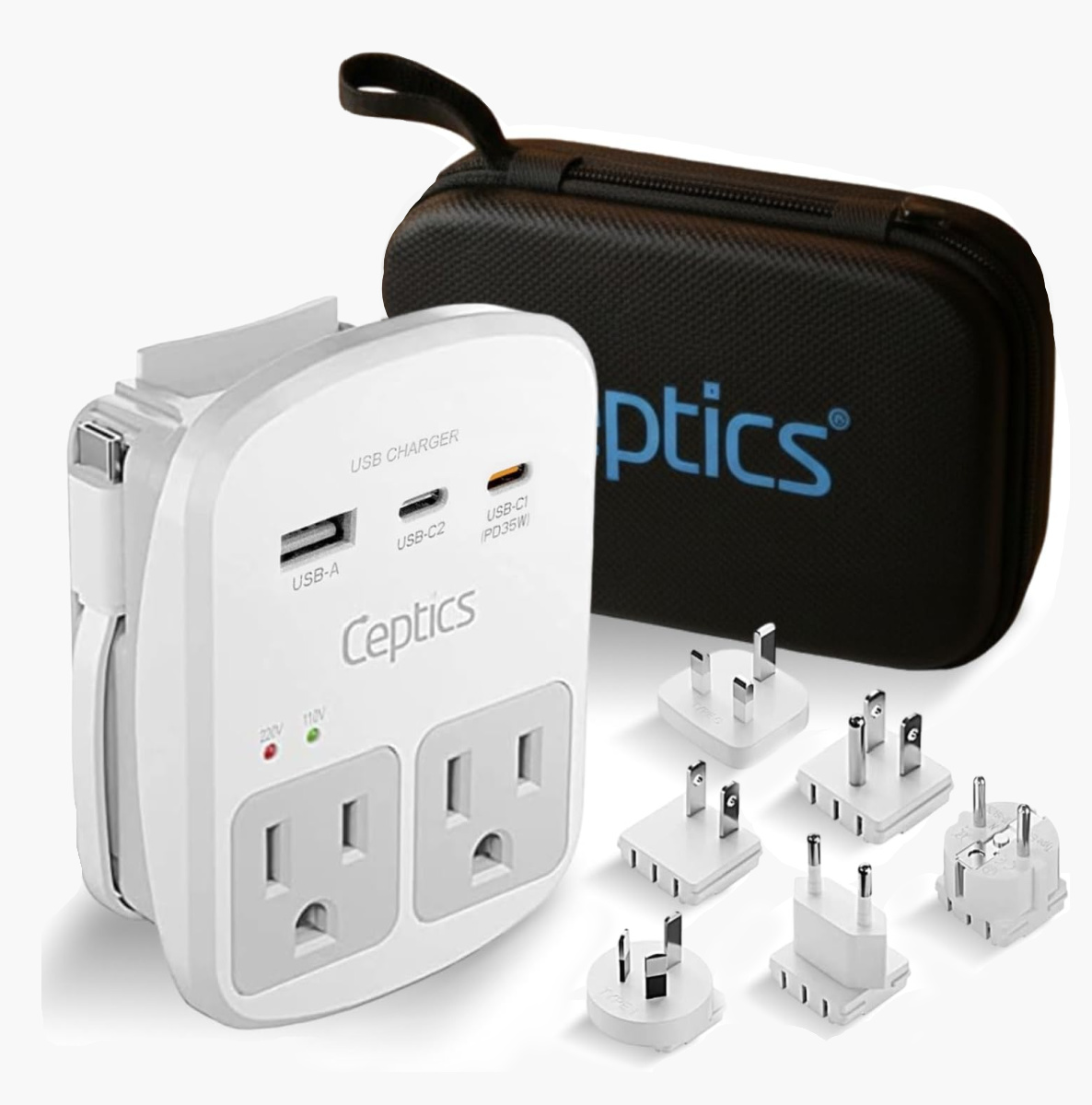
Best Travel Adapter Kit for International Travel: Travel Power Adapter Kits by Ceptics
How Do Travel Adapters Work?
A travel adapter (sometimes called a travel plug adapter) allows your plug to fit into a different country’s electrical outlet. It does not change the voltage supplied by the outlet.
Since plug shapes vary around the world, you’ll need an adapter whenever your destination uses a different outlet than your home country.
For example:
- The United States uses two flat prongs (Type A/B).
- The United Kingdom uses three rectangular prongs (Type G).
- Much of Europe uses two round prongs (Type C, E, or F).
You can either purchase individual adapters for each destination or invest in a universal travel adapter that works in most countries.
Remember: A travel adapter only changes the plug shape not the electrical voltage.
For a complete list of plug types by country, see our international outlet guide.
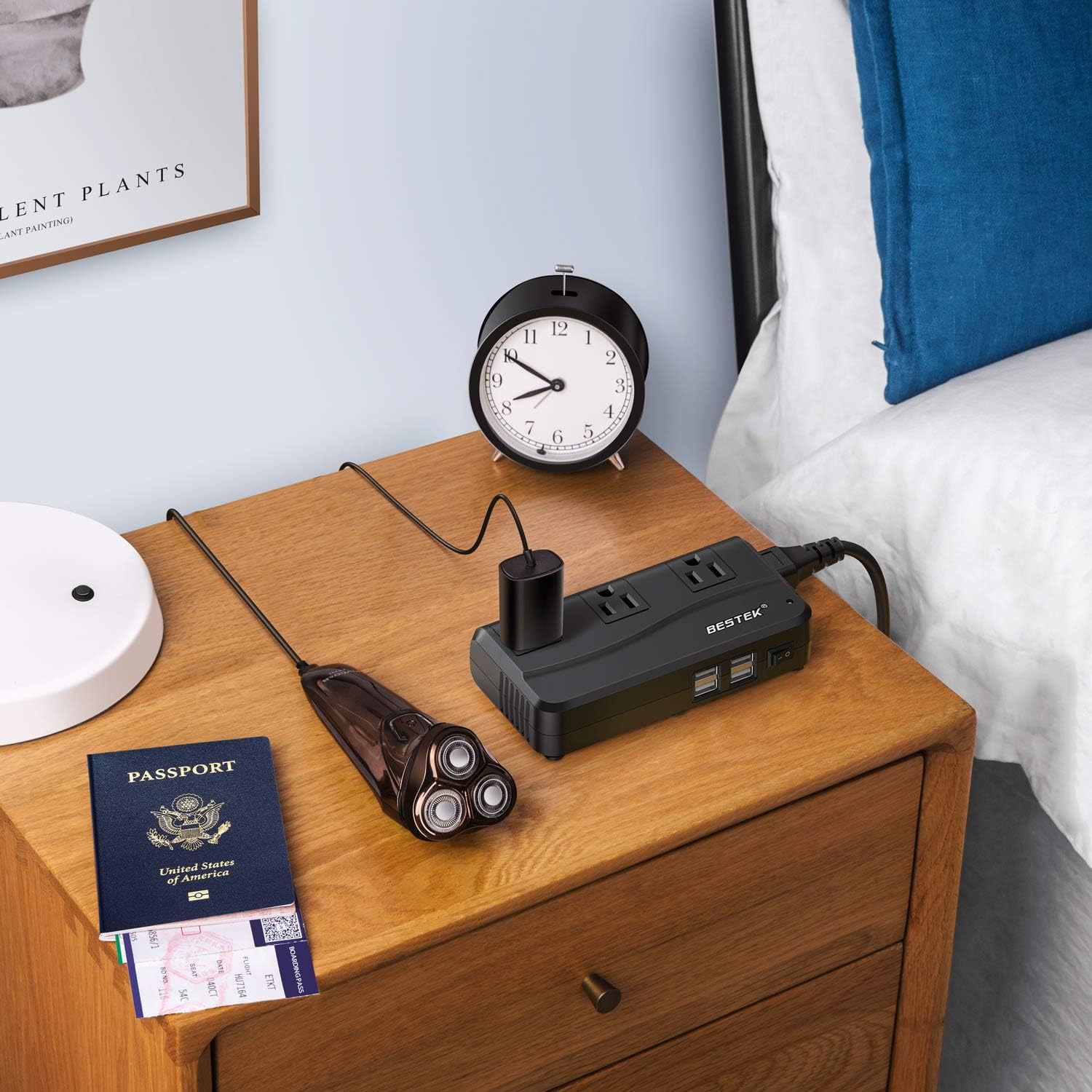
Best Travel Adapter with Built-In Voltage Converter: BESTEK Universal Travel Adapter and Converter Combo
What Is a Voltage Converter?
A voltage converter changes the electrical voltage from one country’s power system to another for example, converting 220–240V to 110–120V, or vice versa.
You’ll only need a voltage converter if your appliance is not dual voltage.
Because voltage converters are often bulky, heavy, and less reliable with high-powered appliances, they’re usually not the best solution for travel. Many experienced travelers recommend bringing dual-voltage devices instead whenever possible.
Hair dryers, curling irons, and straighteners draw a significant amount of power, which can overload some travel converters. Even when using a converter, performance may not match what you’re used to at home.
The easiest way to remember the difference is:
- Travel adapter = changes the plug
- Voltage converter = changes the electricity
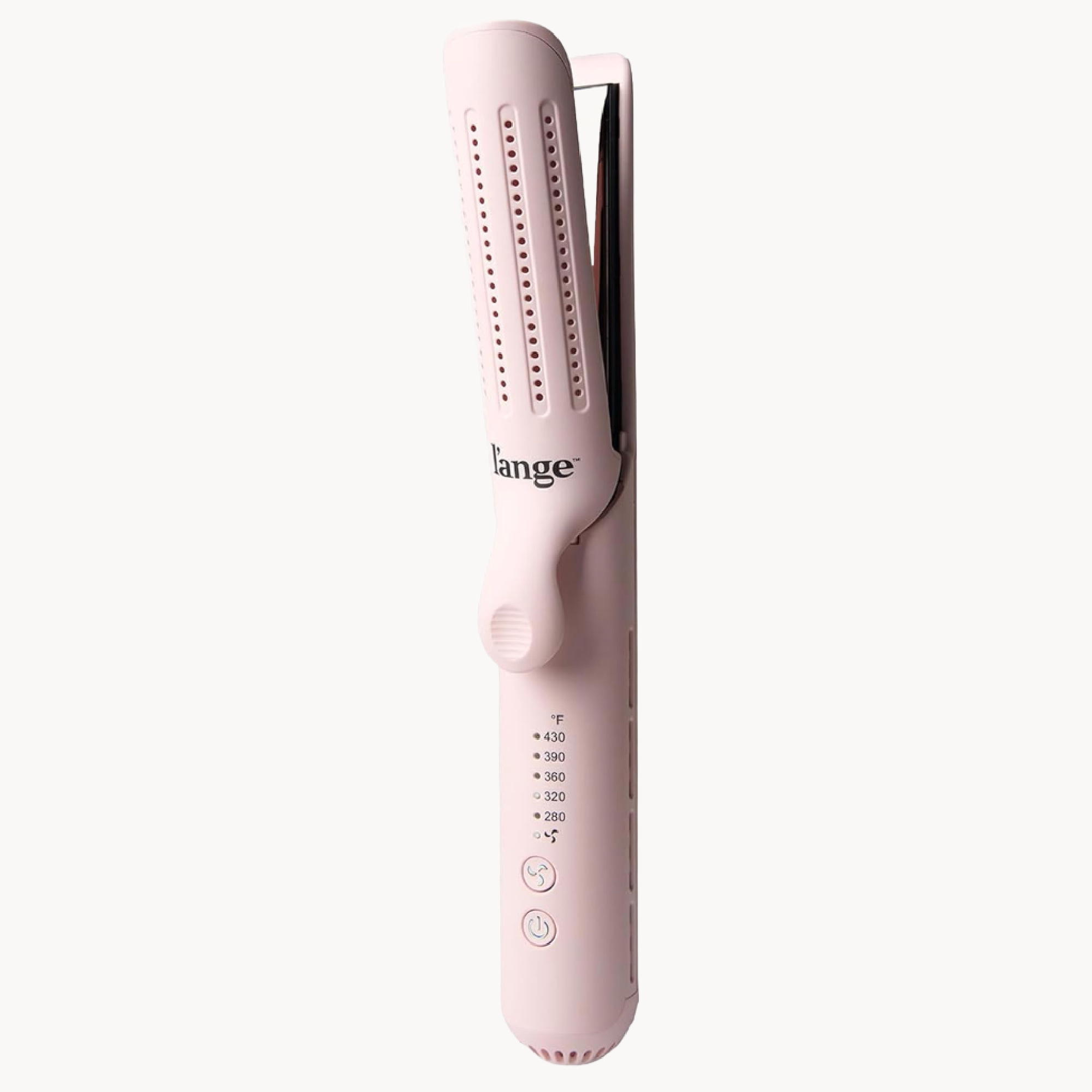
Best Dual Voltage Hair Straightener: L’ANGE Le Duo 360° Airflow Styler
Can I Use My Hair Dryer or Straightener Abroad?
Yes but only if it’s dual voltage.
Hair styling tools require much more power than phones or laptops, so they’re also the devices most likely to experience problems when used internationally.
Before packing your hair dryer or straightener:
- Check for a 100–240V label.
- If it has a manual voltage switch, change it before plugging it in.
- Always use the correct travel adapter for your destination.
If your styling tool isn’t dual voltage, consider leaving it at home. Many hotels provide hair dryers, and some travelers prefer purchasing inexpensive styling tools at their destination rather than relying on bulky voltage converters.
For travel-friendly options, browse our guides to:
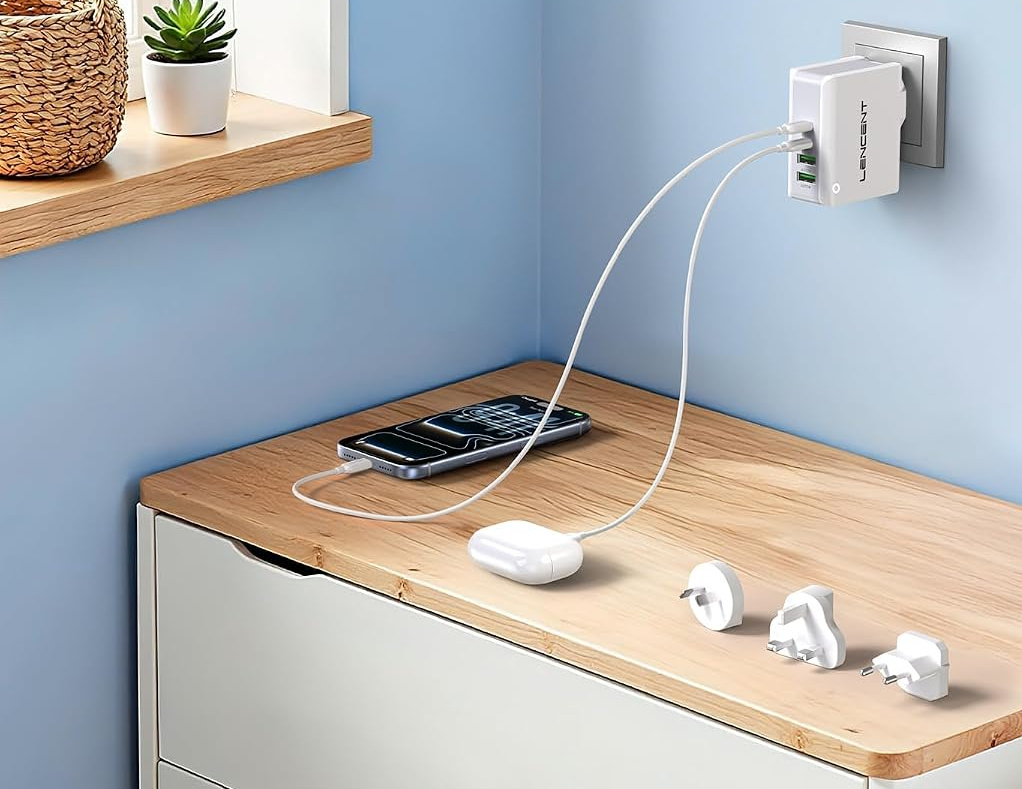
Best USB Travel Adapter: LENCENT Multiport International USB Wall Charger
Can I Use My Laptop or Tablet Abroad?
In most cases, yes.
Nearly all modern laptops, tablets, smartphones, cameras, and USB chargers are dual voltage. Simply check the power adapter or charger for an input rating of 100–240V.
If your charger lists that range, you only need the appropriate travel adapter for your destination.
If your device only supports 110–120V, you’ll need a voltage converter, but this is uncommon with today’s consumer electronics.
A universal travel adapter with multiple USB ports is a great choice because it lets you charge your laptop, phone, tablet, smartwatch, and other devices simultaneously while using just one outlet.
Remember, a travel adapter doesn’t convert voltage it simply allows you to plug your electronics into a compatible outlet in another country. Before you travel, always check the voltage requirements for your phone, camera, laptop, and other electronic devices to ensure they’re safe to use abroad.
Do you still have questions about choosing a travel adapter vs. a voltage converter? Let us know in the comments below!
For more travel trips, please read:
LIKED THIS POST? PIN THIS PIC TO SAVE IT!
Hope you enjoyed this post on travel adapters vs travel converters. Please share it with your friends on Facebook, Twitter, or Pinterest. Thanks for reading!


![Calgary to Manzanillo, Mexico – $460 (CB) to $557 CAD roundtrip including taxes [Nonstop Flights]](https://i1.wp.com/www.ydeals.com/images/ydeals_logo_300x300.jpg?w=175&resize=175,175&ssl=1 "Calgary to Manzanillo, Mexico – $460 (CB) to $557 CAD roundtrip including taxes [Nonstop Flights]")

